Advertisement
1. The Nile River
Advertisement
The Nile River, often referred to as the lifeblood of Egypt, is a majestic waterway that flows through northeastern Africa. Spanning approximately 6,650 kilometers (4,130 miles), it holds the title of the longest river in Africa and is among the longest rivers in the world. The river flows northward, originating from two main tributaries: the White Nile, which begins in East Africa, and the Blue Nile, which starts in Ethiopia. These tributaries converge in Sudan before continuing their journey toward the Mediterranean Sea. The Nile traverses a total of eleven countries, including Uganda, Sudan, and Egypt, making it a vital resource for millions of people.
Historically, the Nile has been central to the development of ancient Egyptian civilization. The river's annual flooding deposited nutrient-rich silt along its banks, creating fertile land that supported agriculture. This agricultural bounty allowed the ancient Egyptians to cultivate crops such as wheat, barley, and flax, which were essential for their survival and prosperity. The predictable flooding cycle of the Nile was so integral to Egyptian life that it influenced their calendar and agricultural practices. As a result, the Nile was revered in Egyptian mythology, often personified as a god who provided sustenance and life.
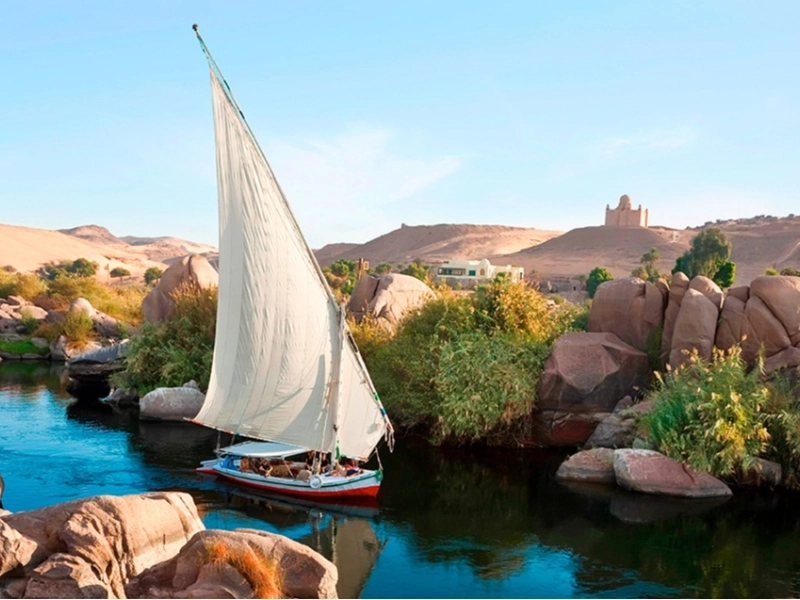
The Nile also served as a major transportation route, facilitating trade and communication between different regions. Boats and barges traveled its waters, carrying goods such as grain, papyrus, and luxury items to markets in distant cities. This trade network contributed to the economic strength of ancient Egypt and helped establish its status as a powerful civilization. The river's banks were lined with cities, temples, and monuments, many of which still stand today as a testament to the ingenuity and artistry of the ancient Egyptians.
In modern times, the Nile continues to be of immense importance. It provides water for drinking, agriculture, and industry to millions of people living in the surrounding regions. However, the river faces significant challenges, including pollution, over-extraction of water, and the impacts of climate change. The construction of dams, such as the Aswan High Dam, has altered the river's natural flow, providing benefits like hydroelectric power and flood control but also raising concerns about environmental degradation and the rights of upstream countries regarding water access.
The Nile River is not just a geographical feature; it is a symbol of life, culture, and history for the people who inhabit its banks. Festivals and rituals celebrating the river's annual flooding demonstrate the deep cultural connection that communities have with this vital waterway. Efforts to promote sustainable management of the Nile's resources are crucial to ensure that it continues to support the livelihoods and cultures of future generations. As global water scarcity becomes an increasingly pressing issue, the Nile stands as a reminder of the importance of cooperation and stewardship of our natural resources.