Advertisement
6. The Irtysh River
Advertisement
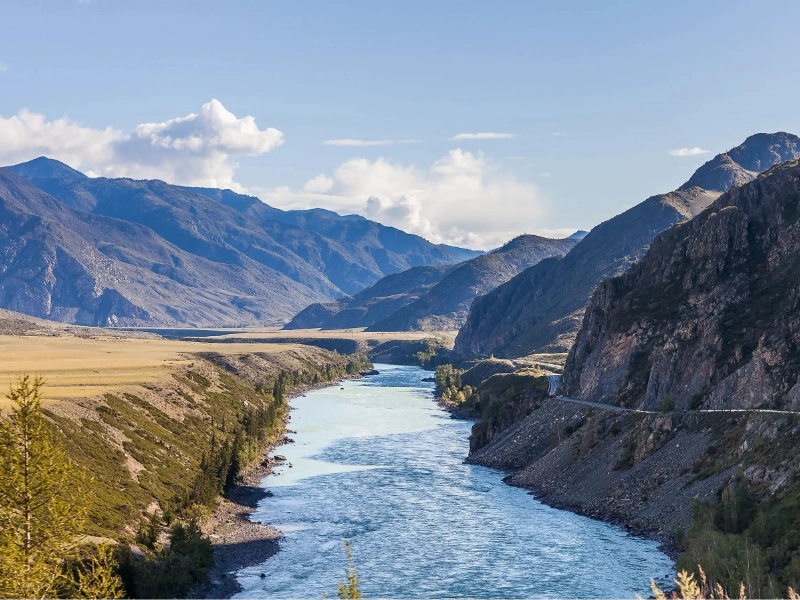
The Irtysh River, one of the longest rivers in Asia, stretches approximately 4,248 kilometers (2,640 miles) and is a vital waterway that flows through Kazakhstan, Russia, and China. Originating in the Altai Mountains, it meanders through Siberia before joining the Ob River and eventually flowing into the Arctic Ocean. The Irtysh serves as an essential resource for the regions it traverses, providing water for agriculture, industry, and communities.
Historically, the Irtysh has been a crucial transportation route, facilitating trade and commerce in the region. The river's navigability allows for the movement of goods and people, connecting remote areas to larger markets. Towns and cities have developed along its banks, benefiting from the opportunities presented by the river. The Irtysh has played a significant role in the economic development of the surrounding regions, supporting industries such as fishing, agriculture, and tourism.
Ecologically, the Irtysh River is home to diverse ecosystems, supporting a variety of plant and animal species. The river's floodplain provides critical habitat for migratory birds, fish, and other wildlife. However, the Irtysh faces significant environmental challenges due to pollution, habitat destruction, and climate change. Industrial activities, agricultural runoff, and urbanization have led to increased contamination of the river's waters, threatening the health of aquatic ecosystems and the communities that rely on them.
Efforts to address these challenges are underway, focusing on pollution control, habitat restoration, and sustainable water management practices. Local governments and organizations are working to raise awareness about the importance of protecting the Irtysh and its ecosystems. Community involvement and education are essential components of these initiatives, fostering a sense of stewardship among residents.
The Irtysh River holds cultural significance for the communities that inhabit its banks. Indigenous peoples have relied on the river for sustenance and transportation for generations, developing a deep connection to the land and its resources. The river is often featured in local folklore and traditions, reflecting the importance of nature in shaping cultural identity.
In conclusion, the Irtysh River is a vital waterway that supports the livelihoods and cultures of the regions it traverses. Its health is intricately linked to the well-being of the environment and the communities that depend on it. By prioritizing conservation and sustainable practices, we can ensure that the Irtysh continues to be a source of life and inspiration for future generations.